
How to Screen Candidates Faster (Without Dropping Quality)

Every talent team hits the same wall: the pipeline is full, the hiring manager wants a shortlist by Friday, and screening every applicant properly would take all week. The usual response is to cut corners — skim the top of the pile, lean on keyword filters, or rush first-round calls. Speed goes up, but quality quietly goes down, and the cost shows up later as a bad hire.
It doesn't have to be a trade-off. Screening slowly is usually a sign of an unstructured process, not a thorough one. Tighten the process and you get both: faster decisions and better ones. Here is how to do it.
Why “faster” usually means “sloppier” — and why it shouldn’t
Most screening is slow because it is inconsistent. Two recruiters read the same résumé and weigh experience differently. A keyword filter rejects a strong candidate who described the same skill in different words. First-round questions change from call to call, so the notes aren't comparable. All of that variability forces manual re-checking, and re-checking is what actually eats the week.
The fix is not to work faster by hand. It is to make each step consistent enough that it can be trusted the first time — and to let software handle the repetitive parts so people spend their time only where judgment is needed.
1. Screen against the role, not against keywords
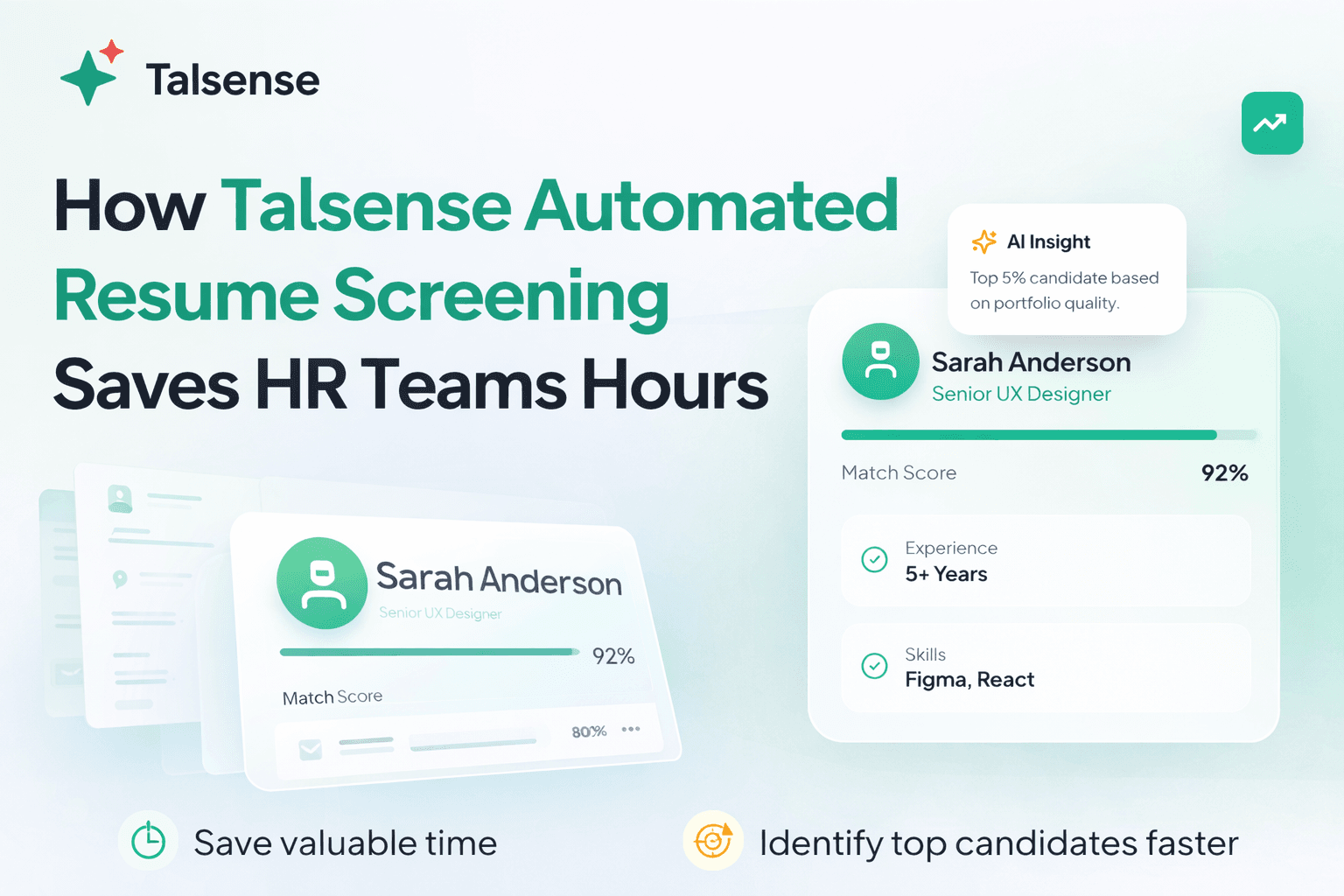
Keyword matching is fast but blunt: it rewards résumé stuffing and misses capable people who phrase things differently. Instead, define what the role actually requires — must-have skills, seniority, and the evidence that proves them — and evaluate every applicant against that rubric. AI resume screening does this at scale, comparing candidate evidence to the job requirements and returning a ranked shortlist with the reasoning attached, so you start from the strongest applicants instead of opening every file.
2. Structure the first round so candidates are comparable
Unstructured interviews are both slower and less predictive. When every candidate gets different questions, you can't compare answers, and you end up re-interviewing to break ties. A structured first round — the same core questions, scored against the same criteria — makes candidates directly comparable and cuts the number of rounds you need.
This is also the round that's easiest to give back time on. Autonomous AI interviews run an adaptive, structured conversation with every qualified candidate on their own schedule, then hand your team a consistent evaluation — so a lean team isn't the bottleneck for first-round coverage.
3. Automate the first pass, reserve people for judgment
The goal isn't to remove recruiters from the process — it's to remove the repetitive work that doesn't need a human. Sorting hundreds of résumés, running identical first-round screens, and compiling notes are all tasks software does consistently and instantly. Automating them means your team engages only with a pre-qualified shortlist, where their judgment actually changes the outcome.
Keep the decision with people. Automation should produce evidence and rankings; hiring managers still decide who advances and who gets the offer. Done right, you speed up the funnel and improve consistency without handing the call to a machine.
4. Protect quality while you speed up
Speed can't come at the cost of trust in the results. As screening moves online and generative tools get better, it's worth confirming that the person being evaluated is the person who applied, and that the answers are their own. Building interview integrity signals — identity checks and anti-cheating measures — into the screening step keeps a faster process defensible instead of fragile.
A practical five-step workflow
1. Write the rubric first. List the must-have skills, the seniority bar, and the evidence that proves each. This one artifact drives every step after it.
2. Rank, don’t read. Score the whole applicant pool against the rubric and start from the top of the ranked list.
3. Standardize the first round. Give every shortlisted candidate the same structured interview so answers are comparable.
4. Automate the repeatable steps. Let software handle sorting, first-round screening, and note-taking; reserve people for the finalists.
5. Decide with evidence. Review the structured scores, then make the call. The data speeds the decision; it doesn’t make it for you.
The takeaway
Screening faster and screening well are the same project. Consistency is what makes a process both quick and trustworthy: a clear rubric, a structured first round, automation for the repetitive parts, and integrity checks to keep the results honest. Put those in place and Friday's shortlist stops being a scramble.
See it in action: explore AI resume screening and autonomous AI interviews, or compare plans on our pricing page.