
Saving HR Teams Hours: How Talsense Automates Resume Screening

Hiring the right talent is one of the most important responsibilities for any organization. However, the traditional hiring process often begins with a time-consuming task: manually reviewing hundreds of resumes. For HR teams managing multiple open roles, this process can take hours—or even days.
This is where automated resume screening changes the game.
Platforms like Talsense are helping companies streamline recruitment by using AI to review, analyze, and rank applicants instantly, allowing HR teams to focus on the most promising candidates instead of sorting through endless CVs.
The Problem with Manual Resume Screening
In a traditional hiring process, HR teams typically receive dozens—or sometimes hundreds of applications for a single role. Each resume must be reviewed individually to determine whether a candidate meets the job requirements.
This process presents several challenges:
- Time-consuming workload: Reviewing each CV manually can take hours for a single position.
- Inconsistent evaluations: Different recruiters may interpret qualifications differently.
- Missed potential: Qualified candidates may be overlooked due to human error or fatigue.
- Delayed hiring decisions: The longer screening takes, the longer the hiring process becomes.
For growing companies or startups, this inefficiency can significantly slow down team expansion.
What is Automated Resume Screening?
Automated resume screening uses AI-powered technology to analyze resumes and compare them with job requirements.
Instead of manually scanning each CV, the system automatically evaluates candidates based on factors such as:
- Skills and expertise
- Work experience
- Education and certifications
- Relevance to job requirements
The platform then assigns match scores and ranks applicants according to their suitability for the role.
How Talsense Automates Resume Screening
Talsense simplifies the hiring process by integrating AI-powered resume analysis directly into the recruitment workflow.
Here’s how it works:
1. Candidates Apply to the Job
Once a job is posted through Talsense, applicants submit their resumes through the platform.
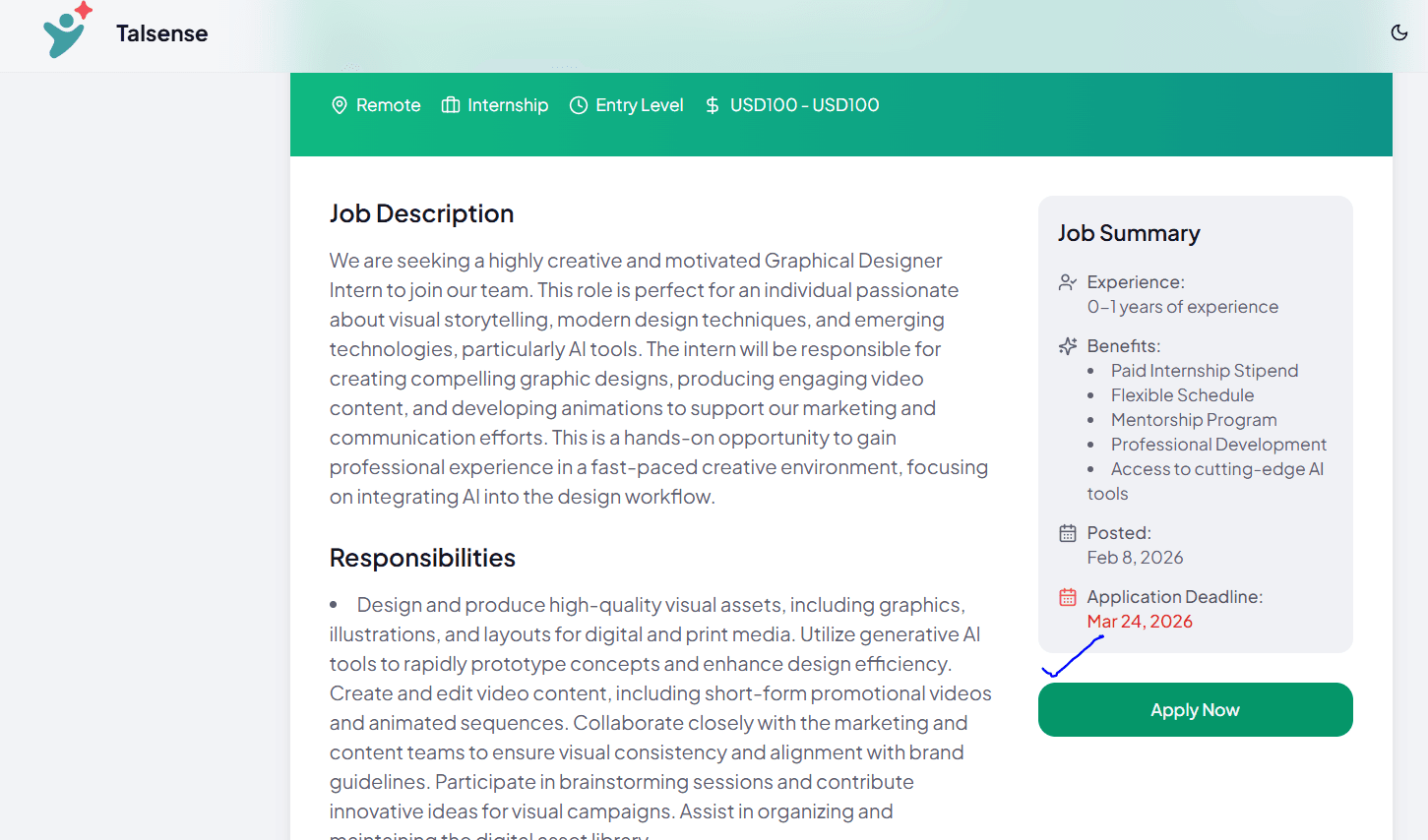
All applications are automatically stored in the company’s hiring dashboard.
2. AI Evaluates Every Resume
Talsense AI instantly reviews each resume and compares it with the job description.
The system analyzes key elements such as:
- Relevant skills
- Industry experience
- Role alignment
- Professional background
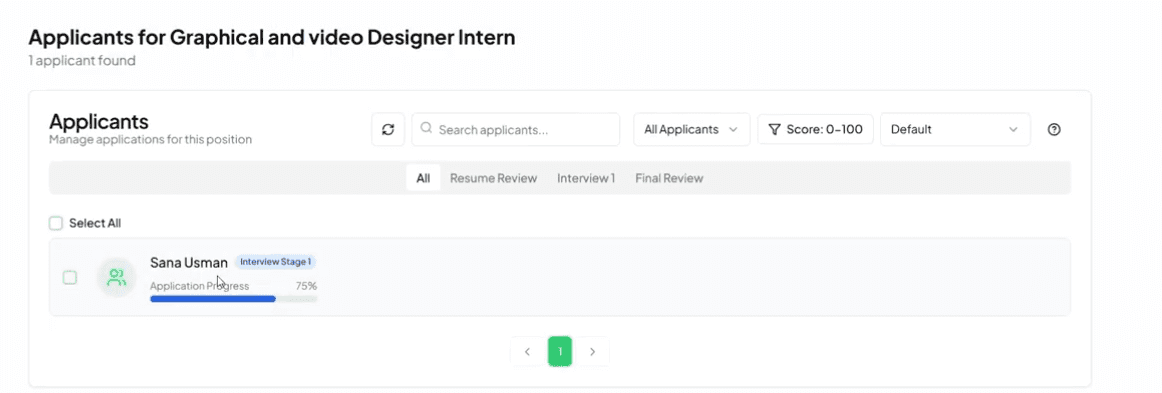
3. Match Scores Are Generated
Each candidate receives a match score indicating how closely their profile aligns with the job requirements.
This allows HR teams to quickly identify high-potential candidates without manually reviewing every application.
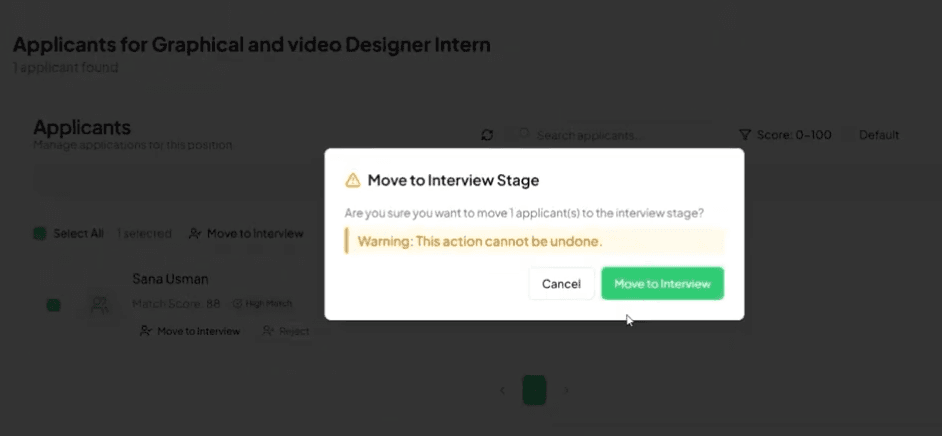
4. Candidates Are Ranked Automatically
Talsense organizes applicants based on their match scores, making it easier for hiring managers to see which candidates deserve immediate attention.
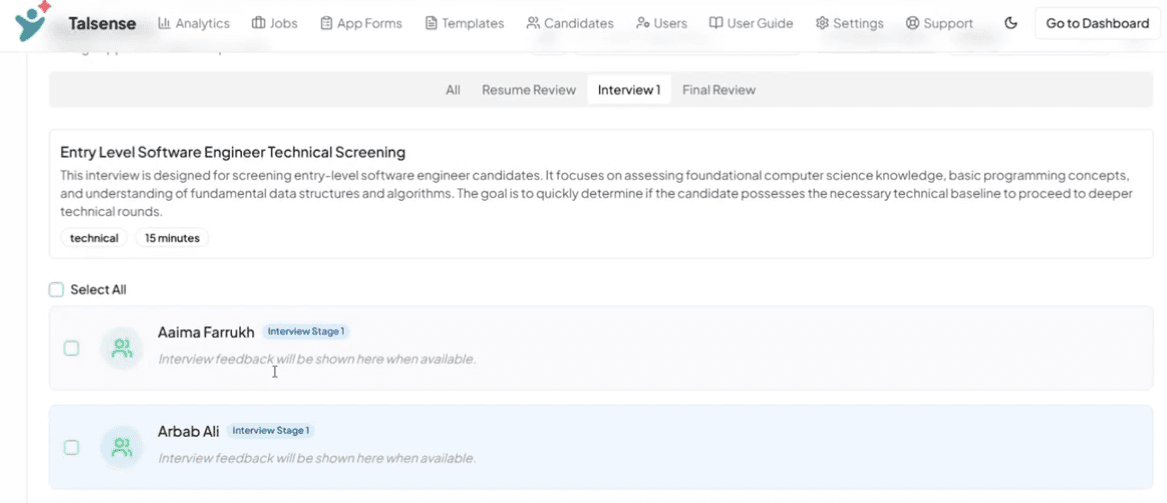
Recruiters can instantly shortlist the most relevant applicants and move them to the next stage.
How Much Time Can HR Teams Save?
Automated resume screening dramatically reduces the time spent on the initial hiring stage.
Instead of spending hours reviewing resumes, HR teams can:
- Instantly view top-ranked candidates
- Focus on interviews and strategic hiring decisions
- Reduce the overall hiring timeline
In many cases, companies can cut resume screening time by up to 80%.
Better Hiring Decisions with Data
Beyond saving time, automated screening also improves hiring accuracy.
With structured evaluation and data-driven insights, companies can make decisions based on:
- Candidate skill relevance
- Role compatibility
- Structured match scores
This ensures a more consistent and transparent recruitment process.
Why Modern Companies Are Adopting Automated Screening
As hiring demands grow, businesses are turning to AI-driven platforms like Talsense to improve recruitment efficiency.
The benefits include:
- Faster hiring cycles
- Reduced administrative workload
- Consistent candidate evaluation
- Better talent identification
- Improved candidate experience
Instead of spending hours sorting resumes, HR teams can focus on what matters most—finding the right talent.