
Consistent and Fair Candidate Evaluation with Talsense
The Challenge of Fair Hiring
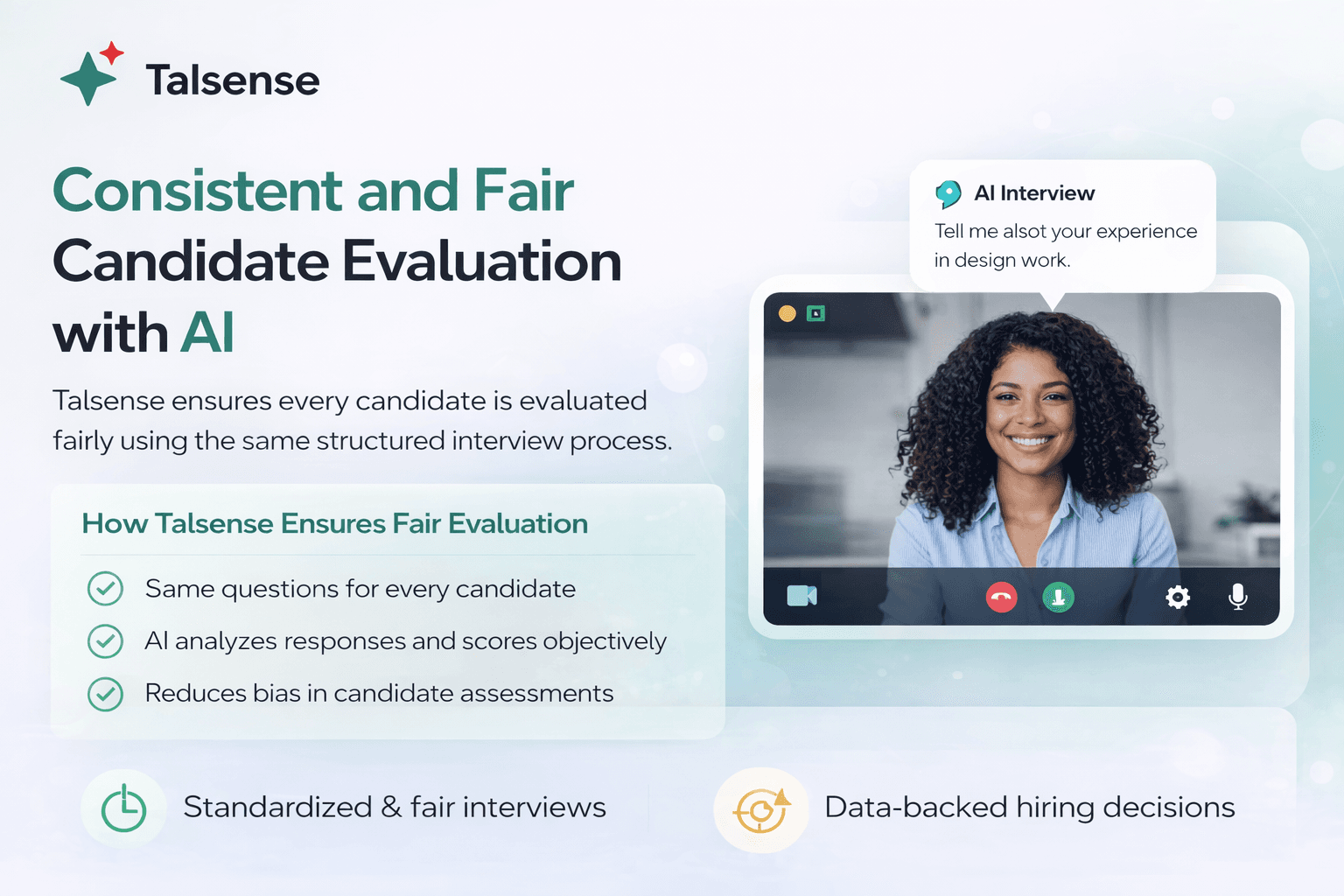
One of the biggest challenges in recruitment is maintaining fairness across all interviews. In traditional hiring processes, different candidates are often asked different questions, and interviewers may evaluate responses based on personal judgment. This inconsistency can make it difficult for companies to compare candidates objectively and can unintentionally introduce bias into hiring decisions.
A Structured Interview Approach
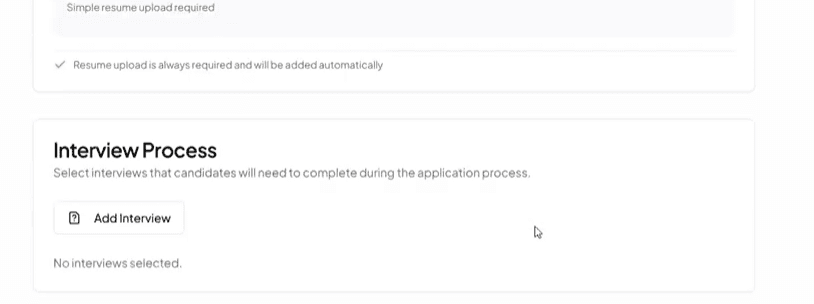
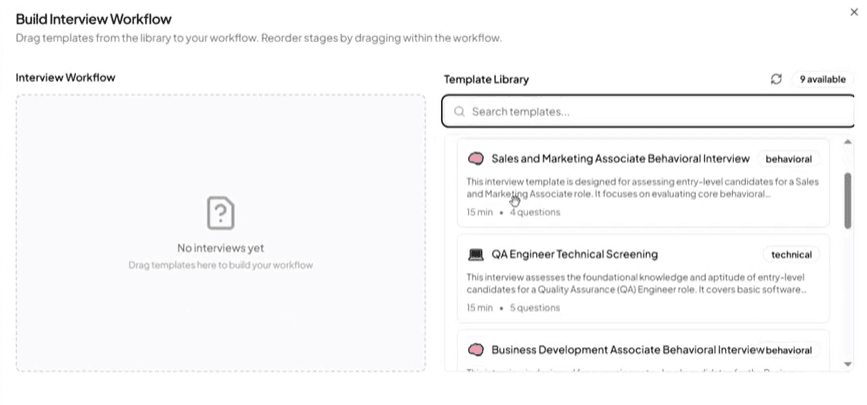
Platforms like Talsense are designed to solve this problem by creating a structured and standardized interview environment. With Talsense, every candidate goes through the same interview framework and answers the same carefully designed questions. This ensures that each applicant is evaluated under the same conditions.
AI-Powered Candidate Analysis
During the interview process, Talsense uses artificial intelligence to analyze candidate responses and assess key indicators such as:
- Communication clarity
- Behavioral responses
- Role-specific knowledge
- Overall candidate potential
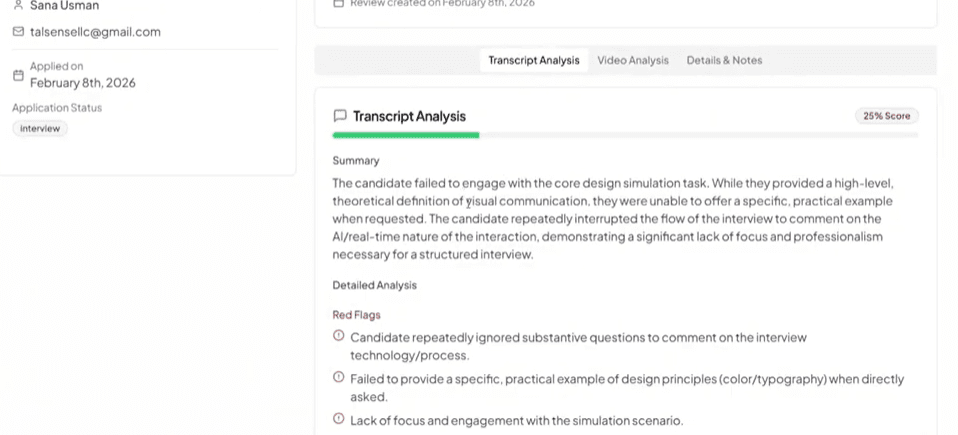
These insights provide hiring teams with a deeper and more objective understanding of each candidate’s capabilities.
Reducing Bias in Hiring
Because every candidate is evaluated using the same structured system, companies can reduce unconscious bias and make more balanced hiring decisions. The standardized approach also makes it easier to compare candidates based on clear data rather than subjective impressions.
Smarter and More Objective Recruitment
By combining structured interviews with AI-driven analysis, Talsense helps companies create a more transparent, fair, and efficient hiring process. This allows organizations to identify the best talent while maintaining consistency and trust in their recruitment decisions.